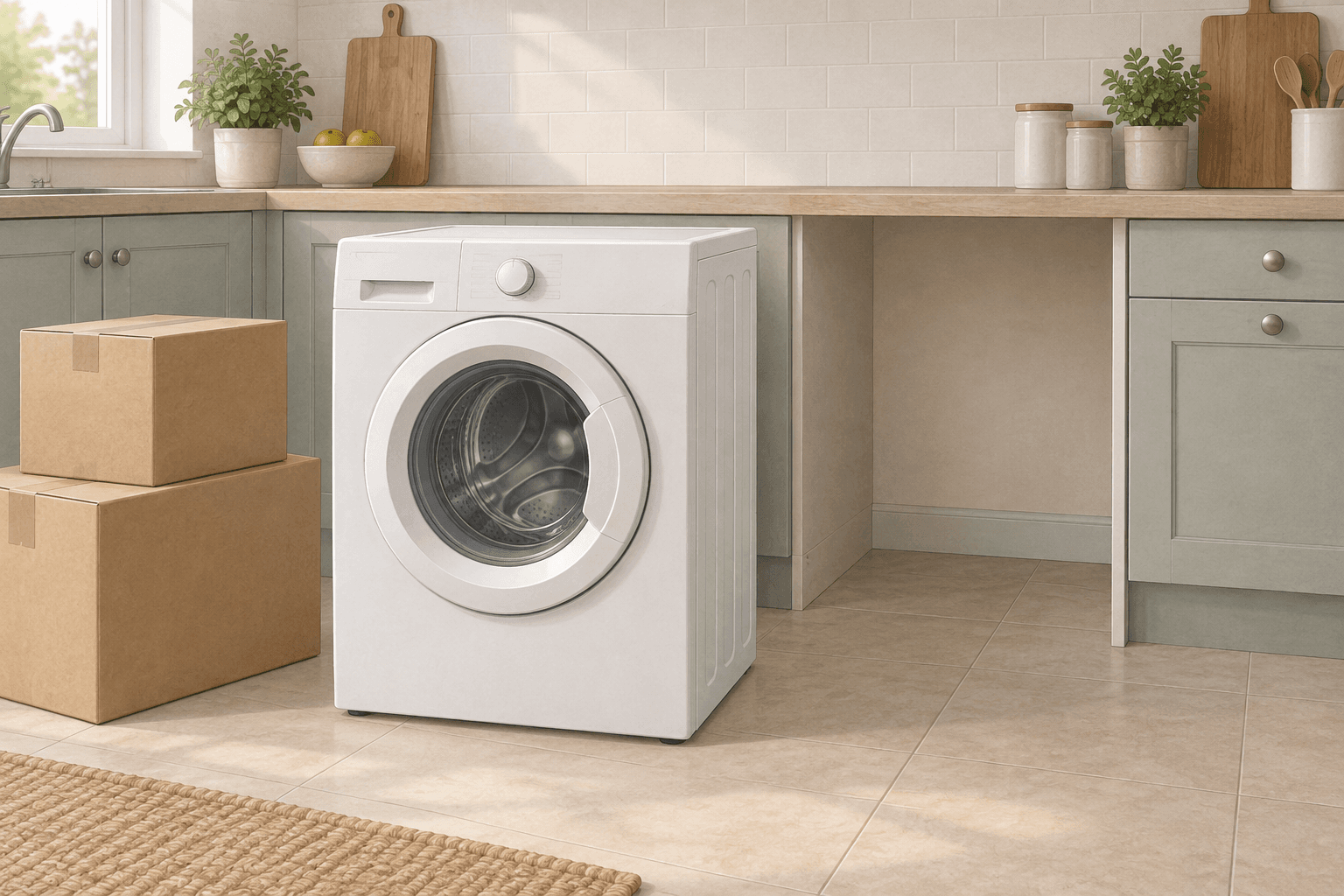
Moving an appliance sounds like moving furniture. It is not: a washing machine or dishwasher needs a water supply, a waste that drains reliably and somewhere to isolate it, and only the first of those is easy to extend.
Tami Plumbing handles appliance installation in West Bridgford, including relocations during kitchen changes. Here is what the job actually involves, and why the timing of it matters more than almost anything else.
The waste is the constraint
Supply pipework can be run a long way without much trouble. Waste cannot, because it depends on gravity, and gravity is unforgiving about long horizontal runs with very little fall.
A machine placed far from the existing waste connection needs a route that drains reliably every time it pumps out. Too little fall and water sits in the pipe, which produces smells, slow draining and eventually a blockage that returns however often it is cleared.
Under a solid floor, running a new waste means breaking out concrete, which changes the job from plumbing into building work. Under suspended timber, it usually means lifting boards and potentially notching joists, which is manageable but is real work rather than an afternoon.
So the first question in any relocation is not where you would like the machine, but where a waste can sensibly go. Sometimes moving it a metre less far solves the entire problem.
- Establish where a waste can realistically run before choosing the position.
- Long horizontal runs with little fall cause recurring problems.
- Solid floors turn a waste route into building work.
- Moving a shorter distance often removes the difficulty entirely.
Supply, isolation and the details
The supply side is more forgiving but still needs doing properly. The new position needs its own isolation valve, positioned where somebody can actually reach it once the machine is in place, which sounds obvious and is frequently ignored.
That valve is what makes every future repair simple. Once an appliance is under a worktop in a fitted kitchen, an unreachable valve effectively means shutting off the house every time anything needs doing.
It is also the moment to replace anything tired. Old or seized valves should be replaced before they fail behind the appliance, and old fill hoses being reused with a relocated machine are a false economy for the sake of a small part.
Leave clearance behind the machine when it goes back. A hose crushed against a wall fails at the crease months later, and the leak happens where nobody can see it.
Do it while the kitchen is apart
This is the whole practical argument. If the appliance is moving location, the job may involve new pipework, a sink waste change or a tap and valve upgrade, and all of that is dramatically easier with units out and floors accessible.
Retrofitting a waste route through a finished kitchen means working around cabinets that were installed over the exact route the pipe needs to take. The same work, done six months earlier, is straightforward.
So the moment to raise it is at the planning stage of a kitchen change, before units are ordered and certainly before they are fitted. It is worth asking the plumbing questions at the same time as the layout questions, because the layout is what creates them.
Where a sink is also moving, the two jobs share the same waste work and should be planned together rather than as two separate visits.
- Raise appliance positions during kitchen planning, not after fitting.
- Combine sink and appliance waste work into one exercise.
- Fit isolation valves in reachable positions while access exists.
- Replace tired valves and hoses while everything is out.
Testing the new position properly
A relocated appliance deserves a more thorough test than one that simply went back where it came from, because everything about its connection is new.
The visit should confirm the supply valve works, the waste route is secure, hoses are not kinked, the appliance can sit level and there is no leak once the first cycle runs. On a new waste route, the pump-out is the real test: it moves water much faster than a tap, and a route with marginal fall will show it there rather than during the fill.
Dry the floor completely before running the cycle so any new water is obvious, and watch the connections rather than the machine.
Related work can sit under taps and fixtures, leak detection or wider plumbing changes, and a relocation that reveals a problem with the existing pipework is much better dealt with there and then than left for later.
Related pages
Questions customers ask
Can I move my washing machine to the other side of the kitchen?
Usually, but the waste route decides how difficult it is. Supply pipework extends easily; waste needs adequate fall, and a long run with little fall drains poorly and blocks repeatedly. Sometimes a shorter move solves the problem entirely.
When should I plan appliance moves in a kitchen refit?
At the layout stage, before units are ordered. New pipework and waste routes are straightforward while floors and walls are accessible, and considerably more disruptive once cabinets sit over the route the pipe needs to take.
Does a relocated appliance need a new isolation valve?
Yes, and it should be positioned where you can actually reach it once the machine is in place. Without a reachable valve, every future repair means isolating the whole house.
Work out where the waste can go, then decide where the machine goes. Do it while the kitchen is apart, fit a reachable isolation valve, and test with a full cycle before anyone signs off.
Tami Plumbing connects and relocates kitchen appliances in West Bridgford. The contact page is the place to describe the move you have in mind.