Taking a washing machine with you involves two places: the kitchen it leaves and the place it is going to. Agree the disconnection and the condition of the empty space before removal day. A machine being ready to carry away does not, by itself, confirm that the remaining water and waste connections have been dealt with.
When arranging the work with a plumber, Nottingham households can ask Tami Plumbing about appliance disconnection as well as installation. Its appliance service covers connecting, disconnecting and relocating washing machines, dishwashers and kitchen appliances. Make clear which of those jobs is needed at each address so the departure and arrival do not get treated as one vague request to move a machine.
Settle which appliance is actually leaving
Start with the practical agreement about the appliance. Is it travelling with you, staying for the next occupier or being removed before a replacement arrives? Confirm that with the people involved before booking work. The plumbing scope depends on whether the space will be empty, receive another machine immediately or remain in use.
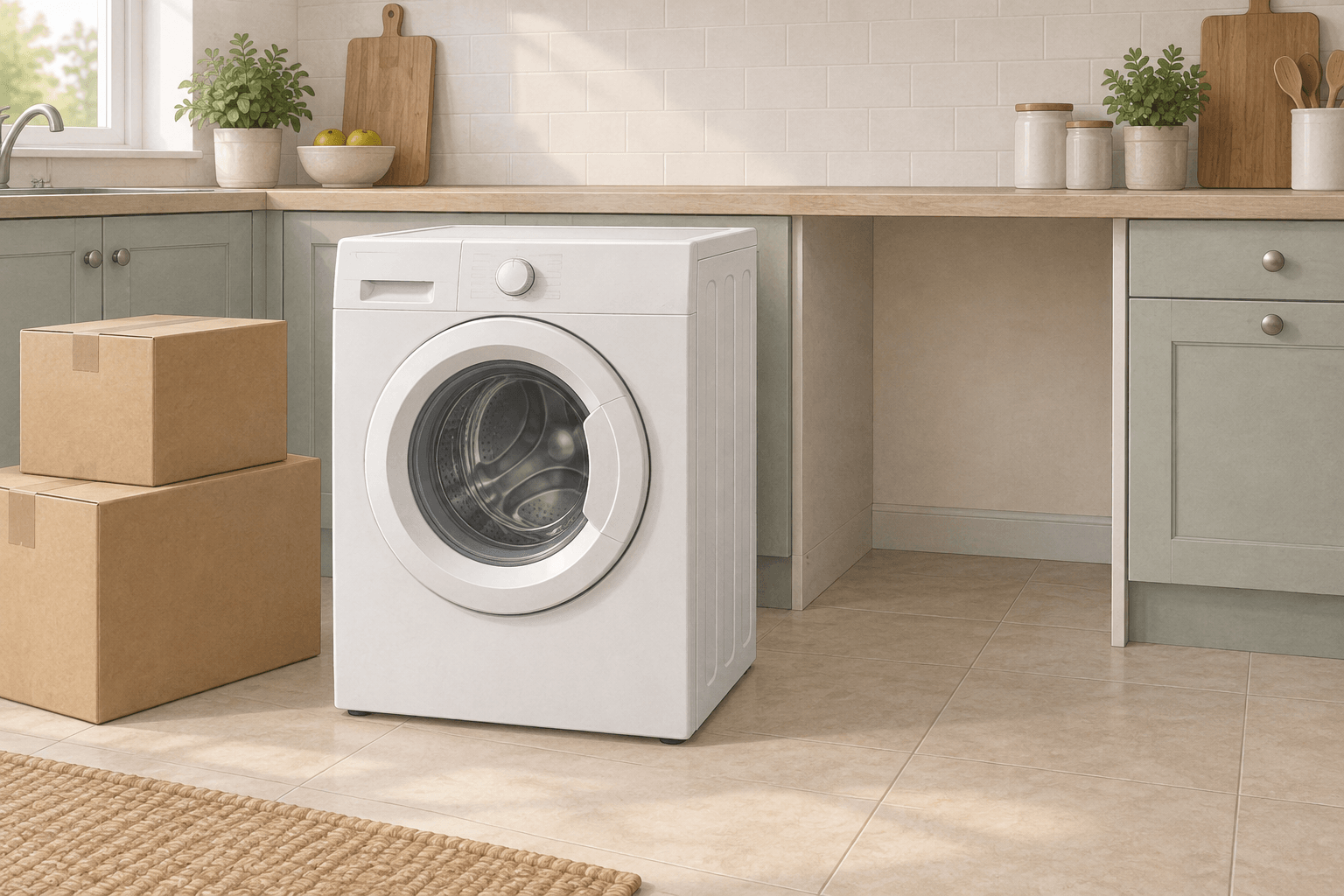
Record the appliance type and whether it is freestanding or fitted behind a kitchen door. Include any cupboard, plinth or worktop that limits access. A removable appliance can still sit inside a kitchen arrangement that needs care. Do not assume the removal team will carry out plumbing changes or that the plumber is also booked to transport the machine.
Separate the last wash from the disconnection appointment
Work backwards from collection. Decide when the household can stop using the appliance and when someone will be available to provide access. Leave time between the plumbing work and the collection rather than relying on everyone arriving in the right order at the same moment.
If a valve, connection or access problem is found, an already waiting removal vehicle puts pressure on a decision that deserves proper attention. Tami Plumbing's appliance guidance includes checking the supply valve and notes that an old or seized valve may need replacement. Mention any known stiffness, leak or previous difficulty in advance; do not force a fitting to make the collection deadline.
Make the empty connection part of the job
Ask how the water feed and waste point will be left after the appliance has gone. The agreed result should address the remaining plumbing, not just the detached hoses. Explain whether the space will remain empty for a while and whether another appliance will eventually use the same position.
The exact treatment depends on the existing arrangement and needs to be decided by the person doing the work. Avoid asking a removal crew to improvise a plumbing solution at the door. Equally, do not assume a small handle that appears closed proves every remaining connection has been checked.
Keep the nearby sink and other appliance in view
The machine may sit beside plumbing that will remain in use. Show the nearby sink cupboard and any other connected appliance when describing the job. If the dishwasher is staying but the washing machine is leaving, say that explicitly. The finished arrangement needs to be considered with the retained kitchen in mind.
Tami Plumbing asks for photographs of the water feed, waste connection, isolation valve and surrounding access when preparing appliance work. Those views are useful here because they show what the departing appliance shares space with. A close photograph of the machine's front cannot explain the connections behind or beside it.
Treat the destination as a separate installation
A machine that fitted one property is not automatically ready for another. The new position needs suitable water and waste connections, space for the appliance and access to the relevant valve. If those points have not been seen, describe them as unconfirmed rather than assuming the old hoses will reach.
A relocation can require new pipework, a sink-waste change or an isolation-valve upgrade. Tami Plumbing's guidance therefore calls for the current and intended positions before the work is confirmed. Send information for both ends if the same enquiry covers both jobs; otherwise make clear that the first booking is for disconnection only.
Use a short handover list
The useful record at the old property is different from a first-cycle installation check at the new one. Keep the following points with the booking so the people handing over the space know what was agreed.
- Which appliance is leaving and which nearby fixtures will stay in use.
- Whether the empty position will receive a replacement immediately or later.
- Who is booked for plumbing work and who is responsible for removal.
- What has been agreed for the remaining water feed and waste connection.
- Any valve, access or existing leak problem identified during the work.
- Whether a separate installation is needed at the destination.
After the appliance is removed, a photograph of the accessible space can preserve the handover condition. It is a record, not a substitute for checking the plumbing. If anything is still leaking or uncertain, resolve that before treating the departure as complete.
Questions before removal day
Is disconnecting the appliance the same as removing it?
They are separate responsibilities unless the booking expressly includes both. Agree who will deal with the plumbing and who will move the appliance out of the property. This matters particularly for integrated machines or restricted access.
Can the next machine simply use the old connections?
They may be reusable, but their condition, position and compatibility need checking with the replacement. Tami Plumbing's installation checks cover the supply valve, secure waste route, hoses, level position and leakage during the first cycle. An empty appliance bay is not proof that those checks have already been completed.
For the arrival side of the move, the existing appliance connection guide explains the installation checks. The appliance service page covers the available work. Keep the departure brief focused on a machine ready for collection and a remaining kitchen whose plumbing has been properly addressed.