A shower can stay completely dry for most of the day and still leave a mark on the ceiling below each evening. That timing is useful. It suggests the water is connected to use, but it does not tell you whether the source is the supply, the controls, the screen, the tray edge or the waste. Opening a ceiling before narrowing that sequence can create more repair work without finding the fault.
When choosing a plumber, Long Eaton households can ask Tami Plumbing about leak detection. The first assessment can consider the position of damp or staining, recent plumbing changes, access, isolation options and whether tracing equipment may be needed. A short record of what was already noticed before the shower was taken out of use gives that assessment a clearer start.
Stop using the shower while the leak is assessed
Once a shower is known or suspected to be leaking, stop using it until the cause has been assessed. If water is spreading, a ceiling is saturated, the leak is near electrics or the shower cannot be isolated, arrange help promptly. Do not run the shower again to produce clearer evidence. Protect the area below where it is safe to do so and keep people away from a damaged ceiling.
Use observations from the last normal use rather than trying to recreate the leak. Photograph marks or staining that are already present, with something fixed in the frame for scale, and note when they were first noticed. Dry accessible surface water only to reduce slip or damage risk, then leave the shower out of use.
Separate water delivery from water drainage
Think back to when moisture first appeared during the last normal use. Water that was visible as soon as the controls were turned on points to a different part of the installation from water that appeared only after the tray had begun to drain. Moisture noticed after spray reached one edge creates another pattern again.
Record only the sequence already noticed: controls on, water running into the tray, spray reaching the screen or wall junction, shower stopped and tray emptying. If you cannot remember a stage, mark it as unknown rather than testing it again. You do not need to name the failed part; the remembered timing and position are the useful evidence.
If the mark is in the room below, record when it was first noticed in relation to the previous shower use and whether it continued growing afterwards. Photograph the existing mark from a safe position. Do not remove light fittings, pierce the ceiling, stand beneath an area that looks swollen or run the shower again to watch for a change.
Look at the edges without disturbing them
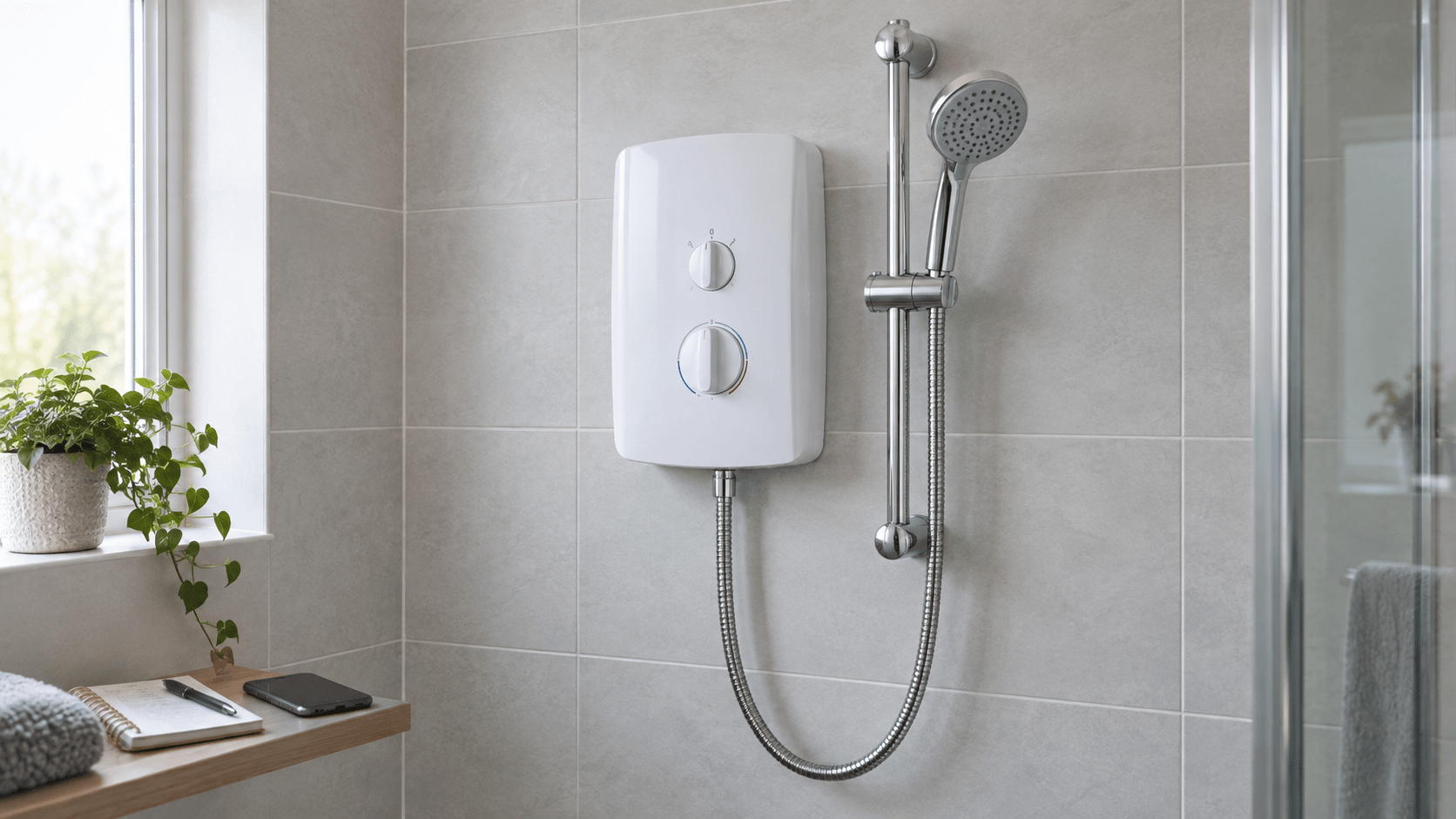
With the shower off, look at the accessible tray edge, screen channel, door seal, tap or valve area and visible joints without touching or removing anything. Note gaps, staining, loose finishes or an existing water path. A photograph taken low and level with the tray edge may show more than one taken from the doorway.
Avoid adding fresh sealant before the source is understood. Covering one visible edge can hide the route temporarily while water continues to travel behind it, and it removes evidence from the inspection. Equally, do not pull old sealant away simply to see underneath. Record what is present and leave the assembly intact.
Use the pattern to narrow the first inspection
- Was first noticed when the controls opened: include the valve, pipe and wall area where moisture was visible.
- Was noticed as the tray filled or emptied: include the waste area and any delay you remember.
- Was noticed after spray reached one side: include the screen, tray and wall junction involved.
- Was noticed only while someone was showering: state that clearly; movement and changing water direction are relevant observations.
- Continued after the shower stopped: note how long it lasted and whether the visible mark kept growing.
Do not recreate any of these patterns. They are observations, not diagnoses. Water can travel along a pipe, joist or surface before it becomes visible, so the wet mark may not sit directly below the source. Existing observations can help the plumber choose where to inspect first and whether access or tracing equipment may be needed.
Include recent changes and access
Say whether the shower, tray, screen, valve, sealant or nearby decoration has changed recently, and whether the symptom started before or after that work. Mention if a panel can be reached normally, but do not remove it unless you have been asked to and can do so without damage.
Add a wide photograph of the whole shower, close views of existing marks or staining and a short timeline based on what was already noticed. If you know where the local isolation is, include that. If you do not, say so rather than testing unfamiliar valves.
Agree the investigation before the repair
A useful quote or booking should distinguish tracing the source from repairing it and from any later making-good. Until the source is known, the final repair may remain uncertain. The evidence determines whether the next step is repair, replacement or further inspection. That avoids pricing one assumed cause before it has been checked.
Frequently asked questions
Does a leak that appears only during a shower prove the tray seal has failed?
No. The source could be connected to the water supply, controls, screen, tray edge or waste, and water can travel before it becomes visible. Share the point in the previous normal-use sequence when moisture first appeared, if known, instead of removing or covering the seal.
What should I send before a leak detection visit?
Send a wide photograph, close views of existing marks or staining and any mark below, plus a short timeline based on what was already noticed. Include recent plumbing changes, normal access, known isolation points and whether the shower is out of use or water is still appearing.
Send the photographs and sequence through Tami Plumbing's contact page. State whether the shower is out of use, whether water is still appearing and whether the area below is affected. That gives the first visit a precise question to answer without asking you to dismantle the room yourself.