A dishwasher that will not drain and a washing machine that fills slowly both look like appliance faults, and both are frequently plumbing faults wearing an appliance's error code. The machine is doing its best; something outside it is not cooperating.
Tami Plumbing covers appliance work in Arnold, and it is worth running a few checks before booking an appliance repair, because the cheapest repair is the one that turns out to be a valve rather than a pump.
Slow filling, or not filling at all
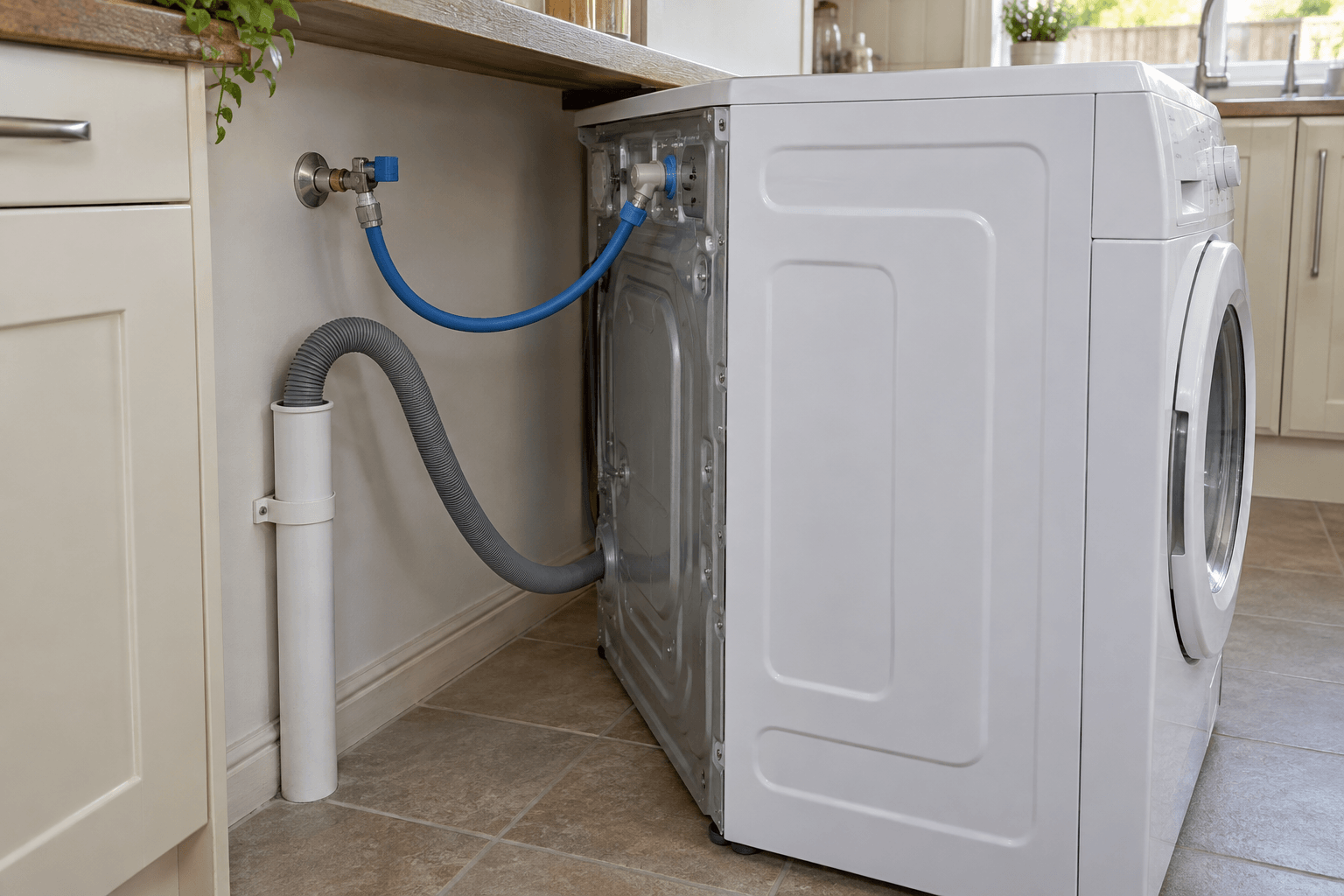
When a machine fills slowly or reports a fill fault, the supply is the first thing to look at rather than the last. The isolation valve behind the appliance is the usual culprit: partly closed after somebody worked nearby, or seized part-way after years of never being touched.
The inlet filter is the second. Most fill hoses have a small gauze filter at the connection, and it collects debris from the supply over time. It is a five-minute check and it accounts for a great many slow-fill complaints.
The hose itself is the third. A machine pushed hard back against the wall can crush its own hose, restricting the flow enough to cause a fault without any visible damage until it is pulled out.
None of these are appliance faults, and none of them need an appliance engineer. All of them look exactly like one from the front of the machine.
- Check the isolation valve is fully open and turns freely.
- Check the small gauze filter where the hose connects.
- Pull the machine out and check the hose is not crushed.
- Confirm the pressure elsewhere in the kitchen is normal.
Not draining, or draining slowly
Drainage faults are where appliance and plumbing problems overlap most. A machine that will not empty may have a blocked pump filter, which is the appliance's own responsibility and is usually a simple clean. Or the waste it discharges into may be restricted, which is entirely a plumbing problem.
The distinguishing test is whether anything else on the same waste is slow. If the kitchen sink also drains sluggishly, or gurgles when the machine pumps out, the blockage is in the shared waste rather than inside the appliance. Kitchen wastes block with fat and food waste, and an appliance discharging into the same run inherits that problem.
The standpipe height and the way the hose sits in it matter too. A hose pushed too far down can siphon, so the machine appears to empty when it should be filling. A standpipe that cannot take the pump-out flow rate backs up and overflows at exactly that moment.
Check the pump filter first, because it is free, and then look at whether the rest of the kitchen drains properly.
Water underneath the machine
Water on the floor is the symptom most often blamed on the appliance and most often caused by a connection. Before assuming the machine is leaking, dry the floor completely, then run a full cycle and watch.
Where the water appears tells you a great deal. Water at the back is almost always a connection, a hose or the waste. Water at the front, from under the door, is more likely the appliance itself. Water only during the pump-out points at the waste connection rather than the fill.
Slow weeps are the ones that do damage, because they run for months under a machine nobody moves. If there has been water under an appliance for a while, damp patches, swollen flooring or a smell in the room mean it is worth checking what the water has reached, and that is where leak detection comes in.
Old or seized valves should be replaced before they fail behind the appliance, and a slow weep at a valve is exactly the warning that precedes a failure.
- Dry the floor completely, then run a cycle and watch.
- Water at the back: connection, hose or waste.
- Water at the front: more likely the appliance itself.
- Water only during pump-out: the waste connection.
Deciding who to call
The dividing line is reasonably clear once the checks are done. Anything inside the machine, such as a pump, a motor, a bearing, a door seal or an electronic control, belongs to an appliance engineer. Anything on the supply, the waste, the valves or the connections is plumbing.
The checks above cost nothing and take twenty minutes, and they frequently move a problem from the first category into the second. That is a useful outcome, because a seized valve or a blocked kitchen waste is a much smaller job than an appliance repair.
If the appliance itself does turn out to be at fault, the plumbing side is still worth attending to at the same time, since a machine coming out for repair is the best opportunity in years to replace tired valves and hoses.
Tami Plumbing covers appliance installation, taps and fixtures, drain unblocking and leak detection in Arnold, which is the whole span of the plumbing side of an appliance problem.
Related pages
Questions customers ask
My washing machine fills slowly. Is that the machine?
Often not. Check the isolation valve is fully open, look at the small gauze filter where the fill hose connects, and make sure the hose is not crushed behind the machine. Those three account for a large share of slow-fill complaints.
My dishwasher will not drain. Who do I call?
Check the appliance's own pump filter first, then see whether the kitchen sink is also slow or gurgles when the machine pumps out. If it is, the blockage is in the shared waste and it is a plumbing job rather than an appliance one.
There is water under my washing machine. What does that mean?
Dry the floor, run a cycle and watch where the water appears. At the back it is usually a connection, hose or waste; at the front it is more likely the appliance. Water only during pump-out points at the waste connection.
Check the valve, the filter, the hose and whether the rest of the kitchen drains. Twenty minutes of that regularly turns an appliance repair into a much smaller plumbing job.
Tami Plumbing handles the plumbing side of appliance faults in Arnold, from valves and hoses to blocked wastes. The contact page is the place to describe what the machine is doing.