The quickest way to get a bad boiler is to buy a package. Packages are priced by bedroom count because that is easy to sell over the phone, and bedroom count tells you almost nothing about how a household actually uses hot water.
Tami Plumbing carries out boiler installation in Nottingham, and a boiler should be sized around the property rather than sold as a default. This is what that assessment covers, and what a quote should tell you once it is done.
What the survey should look at
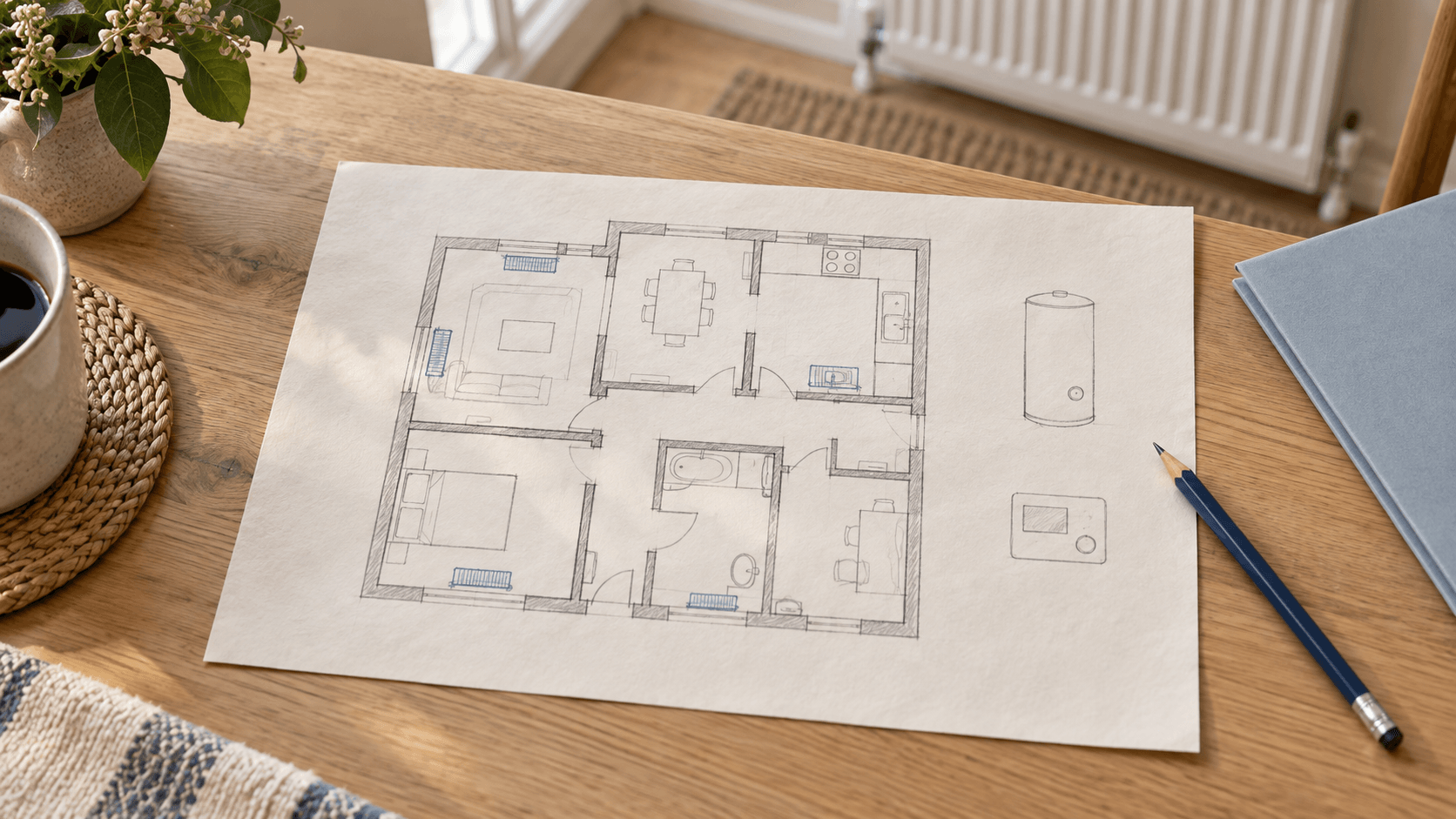
Before recommending an appliance, Aimen checks hot water demand, existing pipework, flue route, radiator performance, controls, condensate route and access. Each of those can change the answer, and several of them can rule out an option entirely.
Hot water demand is the biggest single factor. A flat, a terrace and a four-bedroom house all need different advice, and so do two identical houses where one household showers simultaneously every morning and the other does not.
Existing pipework matters because a new appliance inherits it. Radiator performance matters because a boiler cannot compensate for a system that cannot deliver heat into the rooms. Controls matter because they determine how the appliance actually behaves day to day.
The flue and condensate routes are the practical constraints that decide where the boiler can go, and access decides both the installation and every service visit for the next decade.
- Hot water demand, measured by how the household really uses it.
- Existing pipework and radiator performance, since the new boiler inherits both.
- Flue and condensate routes, which decide where the appliance can sit.
- Controls and access, which decide how it behaves and how it is maintained.
Combi, system or regular
The quote should explain whether a combi, system or regular boiler fits the property, and why. That reasoning is more valuable than the brand.
A combi heats water as it flows, so it suits homes where hot water is used one outlet at a time. It frees up the cupboard space a cylinder needs, which is often the reason it appeals, but its output is limited by how fast it can heat the incoming supply.
A system boiler stores hot water in a cylinder, which handles simultaneous demand far better. Two showers at once is exactly the situation a combi struggles with and a stored system takes in its stride, at the cost of the space and the finite volume stored.
A regular boiler works with a cylinder and a feed tank, and it is often the sensible route where the property's existing arrangement is built around it and replacing everything is out of proportion to the problem.
Tami Plumbing supplies and fits all major brands including Worcester Bosch, Vaillant, Baxi and Ideal, which means the type conversation can be had on its merits rather than steered by whatever one supplier sells.
What the quote should contain
A quote should explain what preparation is needed and what paperwork you receive after installation, not simply name a boiler and a price.
Preparation is where the honest quotes differ from the optimistic ones. If the system needs cleaning, a filter fitting, or radiator work before the new appliance goes on, that belongs in the quote. A new boiler can still struggle if the heating system is dirty or badly balanced, and discovering that after installation is the worst possible time.
The document should also be clear about what is excluded, how long the property will be without heating and hot water, and what happens to the old appliance.
Ask what the warranty requires. Most manufacturer warranties depend on an annual service being carried out and recorded, and knowing that on day one is far better than finding out when a claim is made.
- The specific appliance and why that type suits the property.
- Any system cleaning, filter or radiator work included as preparation.
- Time without heating and hot water, stated up front.
- The paperwork you receive and what the warranty requires from you.
Protecting the new system
The most common cause of trouble with a new boiler is not the boiler. It is the system it was connected to. Modern heat exchangers have narrow passages and far less tolerance for dirty water than the appliances they replace.
Related work may include boiler repair on other parts of the setup, power flushing to clean the existing system, or wider central heating improvements before the job is complete. Where the existing water is visibly dirty or radiators show sludge symptoms, cleaning is protection rather than an extra.
A system filter is the ongoing half of that protection. It catches what an older steel system will keep producing and gives the annual service somewhere to remove it from.
It is also worth spending ten minutes at handover on the controls. A well-specified boiler running on a schedule nobody understands will disappoint, and the fix is a conversation rather than a component.
Related pages
Questions customers ask
How do I know what size boiler I need?
It comes from the property and the household rather than from bedroom count: hot water demand, radiator load, pipework and controls. An oversized boiler cycles badly and wears itself out; an undersized one cannot keep up. Both are avoidable with a proper assessment.
Do I need to clean the system when fitting a new boiler?
Not always, but the system has to be clean enough for the new appliance. If the existing water is dirty or radiators show sludge symptoms, cleaning and a filter protect both the boiler and the warranty, and it belongs in the quote rather than appearing later.
Which boiler brands do you fit?
All major brands, including Worcester Bosch, Vaillant, Baxi and Ideal. The more important decision is usually the type and size for the property, because a well-chosen boiler from any of them beats a poorly sized one from a favourite manufacturer.
Hot water demand, pipework, flue and condensate routes, radiators and access. Those decide the boiler. Anything quoted before somebody has looked at them is a guess with a price attached.
Tami Plumbing sizes boiler installation in Nottingham around the property and the household. The contact page is the place to start.