Suspecting a leak is an uncomfortable place to be. There is a damp patch, or a bill that has risen, or a smell in a room that should not have one, and no obvious source. The uncertainty is often worse than the leak.
Tami Plumbing carries out leak detection in Beeston, and before anybody comes out there are two tests worth running yourself. Between them they usually answer whether there is a leak at all and which system it is on, which is most of the diagnosis.
Test one: the water meter
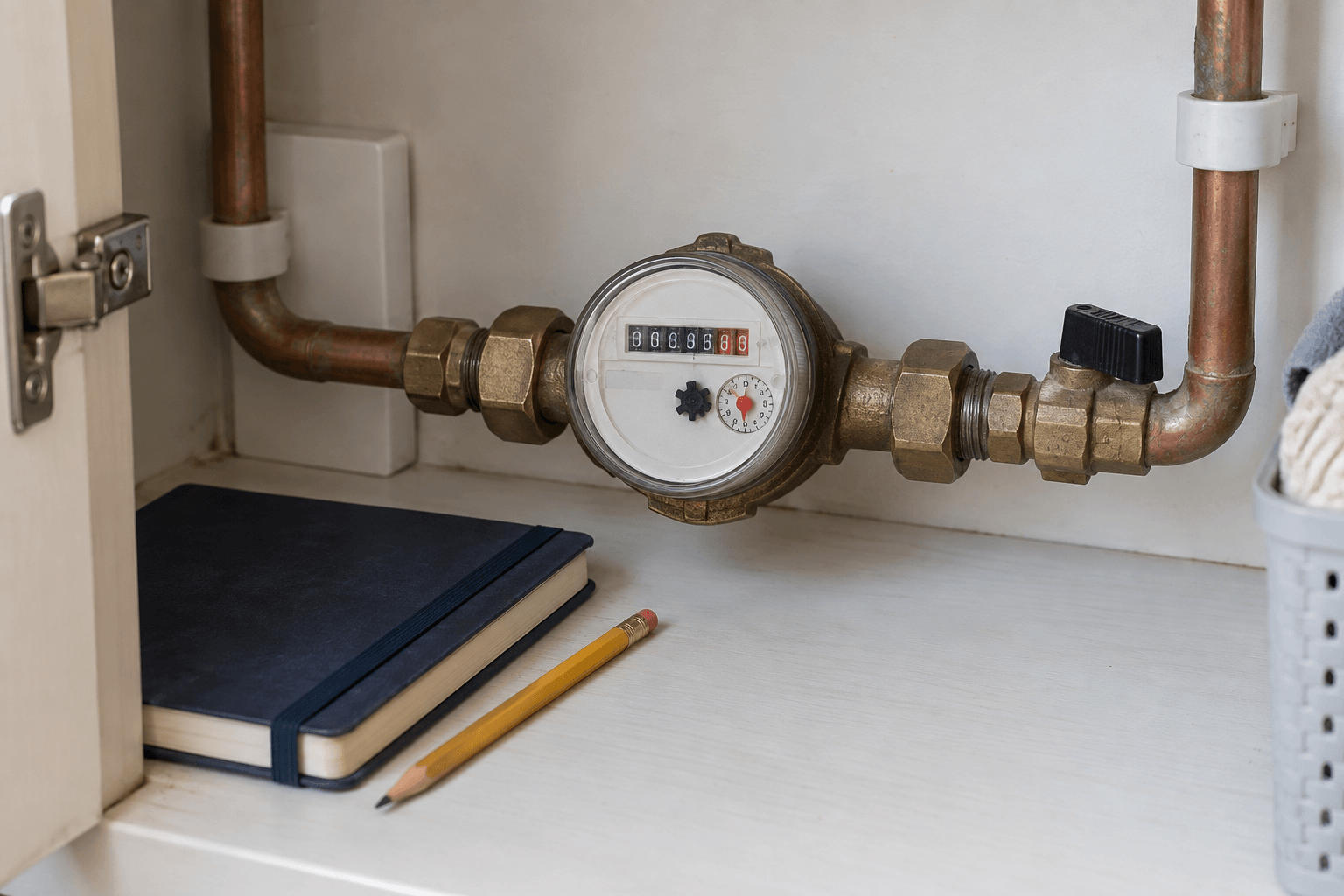
If the property is metered, this is the most conclusive test available and it costs nothing. Turn off every tap and appliance that uses water, including the washing machine and dishwasher, and make sure nobody flushes anything.
Read the meter and write the figure down, including the small dials or digits that measure the finest increments. Leave it for an hour or two with no water used at all, then read it again.
If the reading has moved, water is leaving the system somewhere. That is a confirmed supply-side leak and it needs finding rather than watching. If it has not moved, the supply is intact and the water you are seeing is coming from somewhere else, which is genuinely useful to know.
A leak indicator on the meter, where one is fitted, is more sensitive still: a small dial that turns with no water in use tells you the same thing more quickly. Movement when taps are off is one of the clearest signs of a leak there is.
- Turn off every tap and water-using appliance first.
- Record the full meter reading, including the finest digits.
- Wait an hour or two with no water used at all, then read again.
- Any movement means a supply-side leak, not a coincidence.
Test two: the boiler pressure gauge
This test separates a heating leak from a supply leak, and it is the reason a plumber will ask about the boiler even when the problem looks nothing like heating.
Note the pressure on the gauge when the system is cold, then check it again over the following days and weeks. A sealed system should hold its pressure for months. Boiler pressure loss is one of the standard early clues that water is escaping from the heating side.
If you have been quietly topping the system up every few weeks and thinking of it as maintenance, that is the finding. The system is losing water somewhere, and the repeated refilling is also introducing fresh oxygenated water that accelerates corrosion inside it.
A heating leak and a supply leak look identical as a damp patch and are completely different to trace, so establishing which one you have before anybody arrives saves real time.
The evidence worth gathering
Beyond the two tests, the useful clues are the ones you can observe over days. Damp patches and whether they grow, mould appearing in a specific place, swollen or lifting flooring, stains on a ceiling below a bathroom, and any dripping overflow outside.
Photograph the damp patch with something for scale and repeat it a few days later. Whether a patch is growing, static or drying is one of the most useful pieces of information available, and it cannot be recovered retrospectively.
Note the pattern too. Does it worsen after a shower, after the washing machine runs, or when the heating is on? Each of those points at a different part of the system, and each narrows the search considerably.
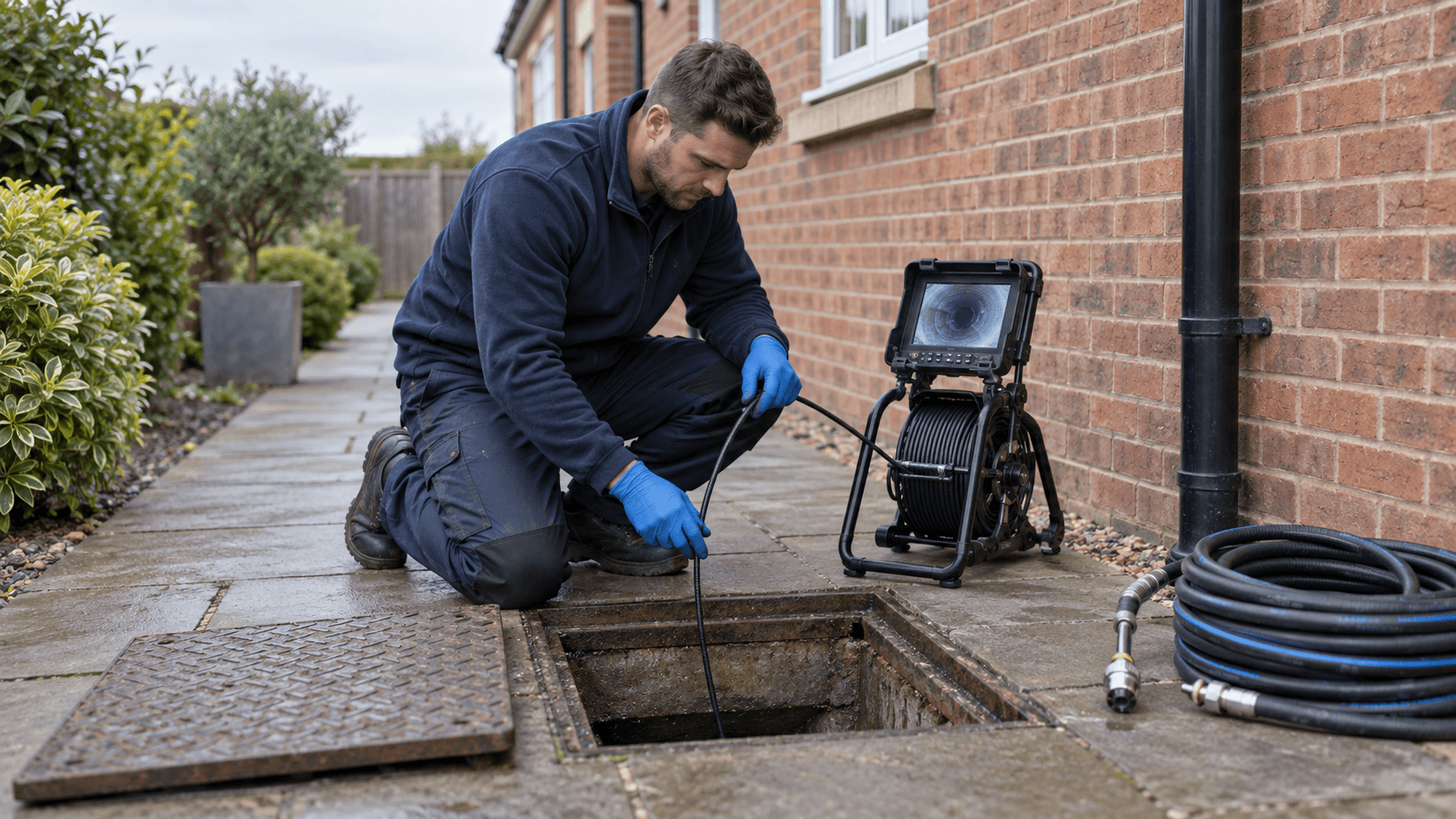
Aimen checks the visible pipework, valves, fixtures, cylinder area, boiler connections and any rooms below the suspected leak, and your observations decide where that search starts.
- Photograph damp patches with scale, then again days later.
- Note whether it worsens after showering, washing or heating.
- Check the room below the suspected source.
- Look for dripping overflows outside, which are easy to miss.
Why finding it accurately matters more than finding it fast
The point of proper leak detection is to pinpoint the source without unnecessary damage. Guessing means opening walls, floors and ceilings speculatively, and the making-good afterwards is often more expensive than the repair itself.
Accurate pinpointing means minimal disruption and a faster repair, which is why the diagnostic work is worth doing properly rather than rushing to lift something. A hidden leak in a wall is a small repair once you know exactly where it is.
Once the leak is found, the job may be a small fixture repair, pipework access, a bathroom waste issue or a heating system fault, and those have different follow-on routes. Photos and a short timeline help separate a one-off spill from a hidden pipe or waste leak.
Tami Plumbing covers leak detection alongside emergency plumbing, taps and fixtures and central heating in Beeston, so whichever of those the leak turns out to be, the repair does not need a new conversation.
Related pages
Questions customers ask
How can I tell if I definitely have a leak?
Use the meter test: turn off all water use, record the reading, wait an hour or two with nothing used, then read again. Any movement confirms water is escaping. It is the most conclusive test available to a homeowner and it costs nothing.
How do I know whether the leak is on the heating system?
Watch the boiler pressure gauge over days and weeks. A sealed system holds pressure for months, so a steady fall means the heating side is losing water. That distinction changes the whole search, because heating and supply leaks are traced differently.
Is a damp patch always a leak?
No, condensation and penetrating damp produce similar marks. The pattern usually tells you: a leak often worsens with a specific activity, such as showering or the heating running, while condensation relates to ventilation and temperature instead.
Run the meter test to confirm a leak exists, watch the pressure gauge to find out which system it is on, and photograph the damp patch twice a week apart. That is a genuinely useful diagnosis before anybody arrives.
Tami Plumbing carries out leak detection in Beeston with the aim of pinpointing the source rather than opening walls speculatively. The contact page is the place to send what you have found.