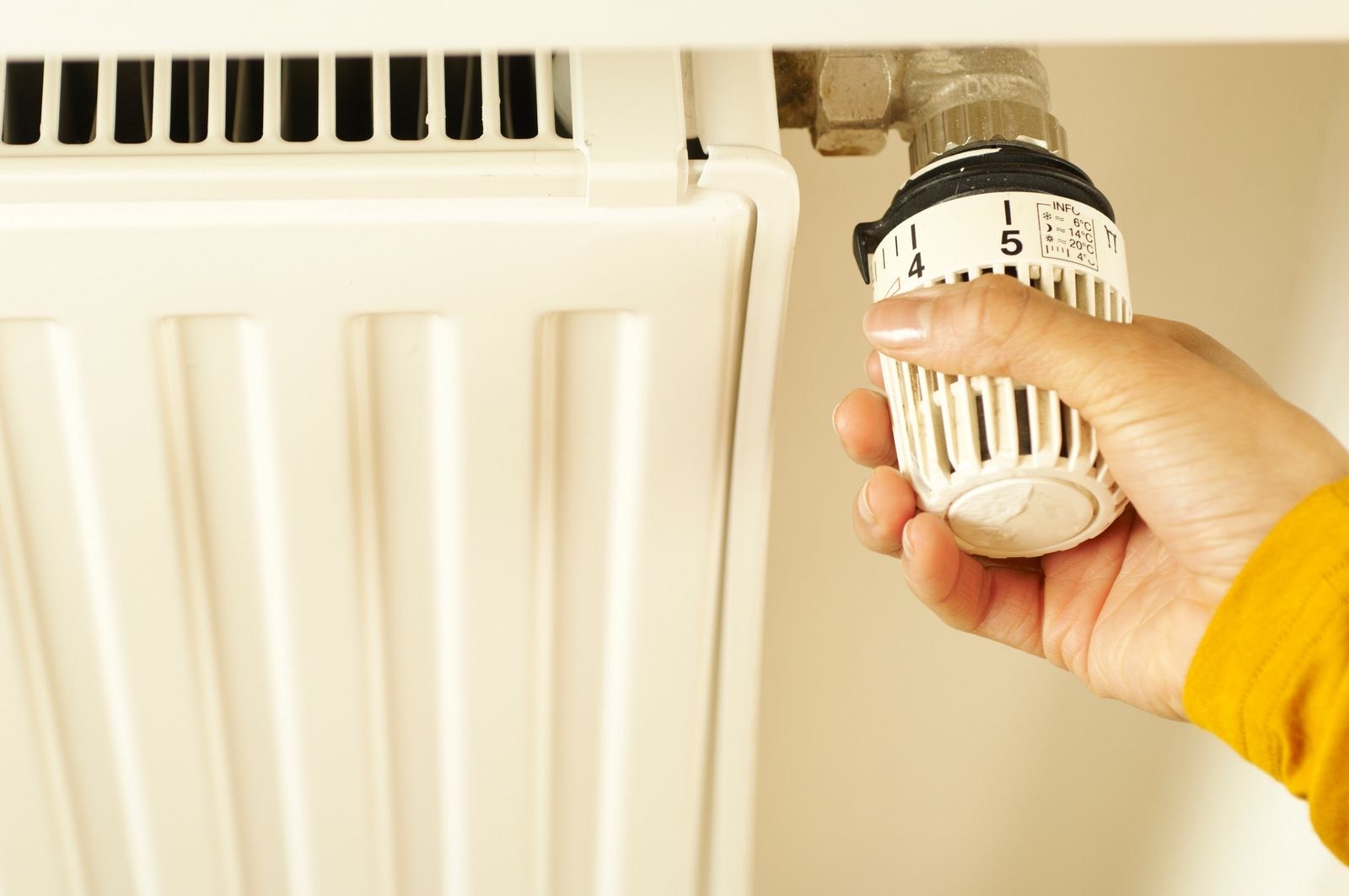

There is a dial inside most modern boilers that controls the temperature of the water sent to the radiators, and in a large number of homes it has never been touched since the day the boiler was fitted. Turning it down, carefully and in the right circumstances, is the cheapest efficiency improvement available to a household.
Tami Plumbing works on central heating across Beeston, and this is what that setting does and how to change it without making the house cold.
Why a condensing boiler often does not condense
A condensing boiler earns its efficiency by extracting extra heat from its own exhaust gases, and that only happens when the water coming back from the radiators is cool enough for those gases to condense. Broadly, that means a return temperature under about 55 degrees. Left at a factory flow setting in the seventies, the return is too hot and the boiler spends the winter running as an ordinary, non-condensing appliance.
Lowering the flow temperature does not mean a cooler house. It means the radiators run cooler for longer, delivering the same total heat more steadily, which most people find more comfortable than the cycle of blasting hot and then going cold. The trade-off is that the house takes longer to come up from cold, which is why the heating schedule usually wants extending rather than shortening.
- Condensing needs a return temperature roughly below 55 degrees.
- Lower flow temperature means longer, steadier running rather than a cooler house.
- Extend the heating schedule rather than expecting a faster warm-up.
How to make the change without regret
Do it in stages and out of the depth of winter. Drop the flow temperature in steps of five degrees, live with each setting for several days, and stop at the point where the coldest room still reaches temperature on a cold day. Every house has a different floor, set by its insulation and its radiator sizes.
The rooms that fail first are the ones with radiators sized for hotter water, and the answer there is a larger radiator in that room rather than pushing the whole system back up for one space. That single upgrade often lets the entire house run cooler and cheaper.
- Reduce in five-degree steps, several days apart.
- Stop where the coldest room still gets comfortable.
- Upgrade one undersized radiator rather than raising the whole system.
Balancing, which is the other half of the job
Balancing sets how much flow each radiator receives, using the lockshield valve at the opposite end from the thermostatic head. Without it, radiators nearest the boiler take most of the water and heat quickly, while the far end of the circuit gets whatever is left, which is the classic cold bedroom at the end of the landing.
The work is methodical rather than difficult: open everything, let the system settle, then close the lockshields on the fast radiators until the temperature drop across each radiator is roughly even. It takes an hour or two on a typical house and it makes a lower flow temperature possible, because heat is arriving everywhere rather than pooling near the boiler.
- Balancing is set on the lockshield valve, not the thermostatic head.
- Aim for a similar temperature drop across every radiator.
- A balanced system tolerates a much lower flow temperature.
What has to be true before any of this works
None of it helps on a dirty system. Sludge restricts flow, creates cold spots at the bottom of radiators and makes balancing meaningless because the restriction is inside the emitter rather than at the valve. Cleaning comes first, then inhibitor and a filter, then balancing, then the flow temperature.
Hot water is a separate setting and should stay hot. On a combi, the hot water temperature is set independently of the heating flow, and on a stored system the cylinder needs to reach a proper storage temperature for safety reasons. Tami Plumbing sets the two separately at every visit, because turning both down together is how a sensible efficiency change becomes a genuine problem.
Related pages
Questions customers ask
What should my boiler flow temperature be set to?
Many homes are comfortable somewhere in the fifties to low sixties once the system is balanced, but the right figure is whatever still heats the coldest room on a cold day. Find it by reducing in steps rather than guessing.
Will turning the flow temperature down make my house cold?
Not if it is done in stages and the schedule is extended. The house warms more gradually and holds a steadier temperature. If one room fails, that radiator is undersized and is the thing to change.
Should I turn my hot water temperature down as well?
No. Hot water is set separately and needs to stay hot, particularly on a stored cylinder where a proper storage temperature matters for safety. Only the heating flow temperature is being reduced.
Clean the system, balance the radiators, then bring the flow temperature down in steps until the coldest room draws the line. That order costs nothing in parts and changes what the boiler does all winter.
Tami Plumbing covers Beeston for central heating, balancing and system cleansing. The contact page takes the make of boiler and which rooms underperform.