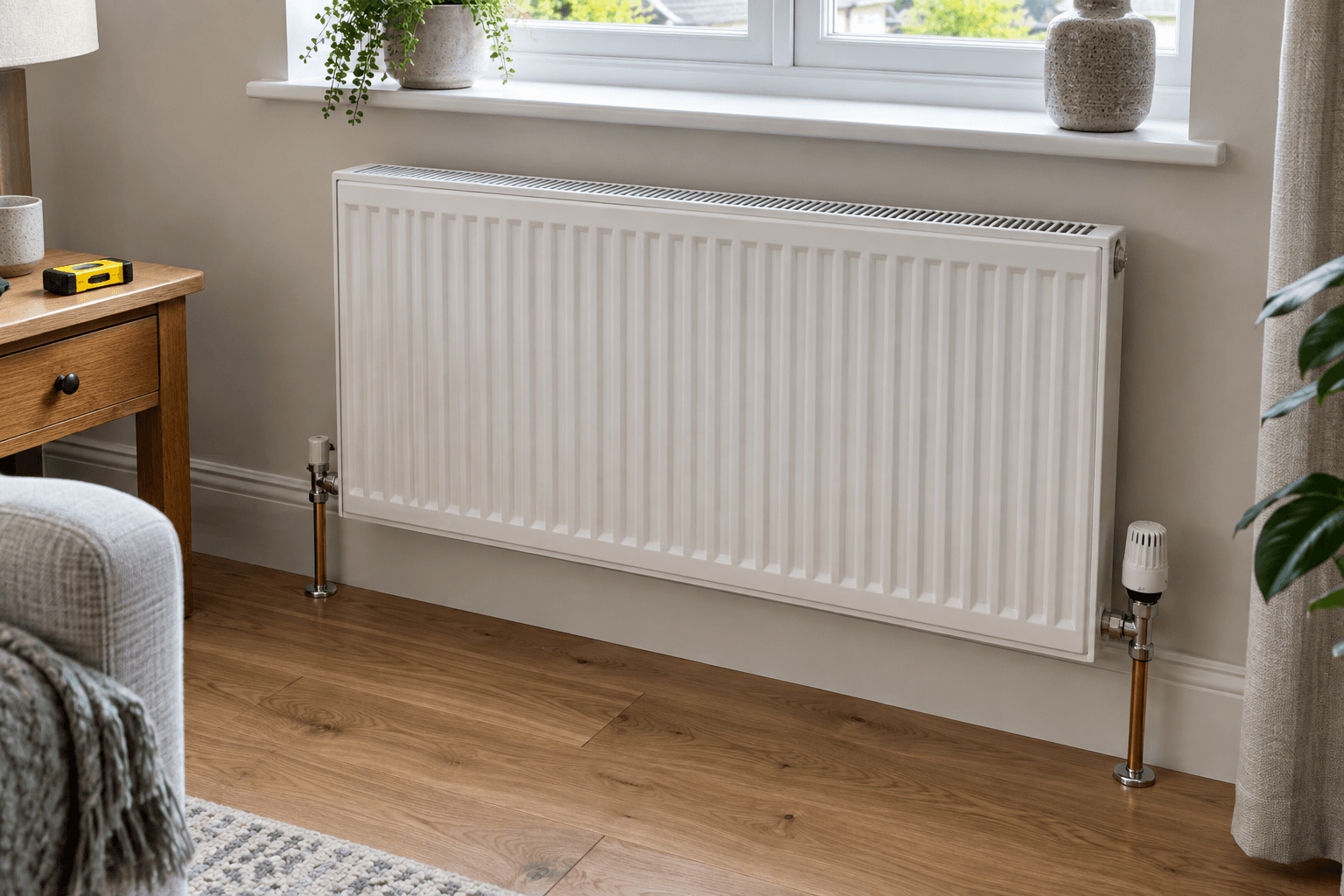

Changing a radiator looks like a cosmetic job and is actually a heating decision. Every radiator is sized to put a certain amount of heat into a certain room, and swapping one for something taller, flatter or more attractive can quietly reduce the output of that room by a third.
Tami Plumbing carries out central heating work across Nottingham, including new radiators, designer radiator swaps, towel rails, thermostat changes and pipework alterations. Here is how to make those changes without ending up with a colder house and a better-looking one.
Output first, appearance second
Radiators are rated for the heat they emit, and that rating depends on surface area, the number of panels and fins, and the temperature of the water going through them. Two radiators of identical size can have very different outputs.
Designer radiators are where this bites hardest. A flat vertical panel is often chosen precisely because it is slim and understated, and slim and understated is exactly what reduces output. The result is a beautiful radiator in a room that never quite warms up.
The fix is not to avoid them but to size them properly: work out what the room needs, then choose a model that delivers it, which may mean a larger unit than the one being replaced. That is a much better conversation to have in a showroom than in February.
A towel rail deserves the same scepticism. A heated towel rail typically emits much less than the radiator it replaces, so a bathroom heated only by one can end up noticeably cooler than it was.
- Check the output the room needs before choosing a model.
- Slim vertical designs usually emit less than the panel they replace.
- A towel rail alone often under-heats a bathroom.
- Match the model to the requirement, not the requirement to the model.
What has to be checked around the change
Central heating work should look at the whole system: boiler performance, radiator sizing, valves, pipe routes, controls, pressure, sludge symptoms and whether every room heats evenly. A radiator swap is a good moment to look at all of it, because the system is coming down anyway.
Pipe centres and valve positions are the practical constraint. A replacement radiator whose connections do not line up needs pipework alterations, and that is the difference between a quick swap and a job that involves lifting a floorboard.
It is also the right time to fit or replace thermostatic valves, to check the lockshield at the other end, and to look at whether the radiator is even in the right place. Radiators are often where they are because that is where the pipe was in 1978.
Where several radiators are changing, the system will need rebalancing afterwards, because altering outputs alters how the flow distributes itself.
What the quote should say about the water
Every radiator change means opening the system, and what happens to the water is the part most quotes leave vague. The quote should make clear whether the system needs draining, testing, balancing or inhibitor afterwards.
Inhibitor is the one that gets forgotten. Draining a system removes the corrosion inhibitor along with the water, and refilling without replacing it leaves the system unprotected from the moment it is refilled. It is a small cost and a large consequence.
Balancing is the second. New radiators with different outputs change how water distributes around the system, and without rebalancing you can fix one cold room and create another.
Testing matters because every joint that was disturbed is a potential leak, and a leak behind a newly decorated wall is an expensive way to find out that nobody pressure-tested the work.
- Confirm inhibitor is replaced after any drain-down.
- Expect rebalancing when radiator outputs change.
- Ask how the work will be tested before the room is put back.
- Consider a system filter while the system is already open.
When cold radiators mean something else
Sometimes the reason a room is cold is not the radiator at all. Radiators that are cold at the bottom, a noisy boiler or uneven heating can point to circulation problems rather than to undersized emitters, and replacing the radiator will not fix any of them.
The test is where the cold is. Cold at the top with a warm bottom is air, and bleeding is the answer. Cold at the bottom with a warm top is sludge settling where the flow is slowest. Cold all over while neighbours are hot is a valve or a balancing problem.
Where those symptoms are widespread, the next step may be power flushing, boiler repair or, where the appliance is tired, boiler installation. Spending on new radiators before dealing with a dirty system is spending in the wrong order.
Tami Plumbing can help with the radiator work and with the diagnosis behind it, which matters because those two conversations are usually the same conversation.
Related pages
Questions customers ask
Will a designer radiator heat the room as well as the old one?
Often not, unless it is sized for the job. Slim vertical panels frequently emit less heat than the conventional radiator they replace, so the model should be chosen against the output the room needs rather than on appearance alone.
Do I need to add inhibitor after changing a radiator?
Yes. Draining the system removes the inhibitor with the water, and refilling without replacing it leaves the system unprotected against corrosion from the moment it is refilled. It should be stated in the quote rather than assumed.
Is a heated towel rail enough to heat a bathroom?
Frequently not. Towel rails typically emit considerably less heat than a standard radiator of similar size, so replacing a radiator with one can leave the room noticeably cooler. Check the output figures before deciding.
Size the radiator to the room, sort the valves and pipe centres before ordering, and make sure the quote covers draining, testing, balancing and inhibitor. That is a radiator change that leaves the system better rather than prettier.
Tami Plumbing carries out central heating work across Nottingham, from single radiator swaps to system improvements. The contact page is the place to start.