Most household jobs sit on a spectrum from do-it-yourself to call somebody. Gas work does not sit on that spectrum. It is a legal category of its own, and the reason is that the failure mode is not a leak on the floor but carbon monoxide, which has no smell and no warning.
Tami Plumbing covers gas engineer work across Nottingham, and this article is about the boundary: which jobs require a registered engineer, how to verify one, and what the warning signs look like in a home.
What counts as gas work
The category is broader than most people expect. It covers anything that involves the gas supply or a gas appliance: installing, servicing, repairing, moving, disconnecting or reconnecting.
That includes the jobs that feel domestic rather than technical. Fitting a gas hob during a kitchen change is gas work. Disconnecting a gas cooker so a kitchen can be fitted is gas work. Moving a gas fire, capping off an old supply, or altering the pipework to reposition a boiler are all gas work.
It also covers work near the meter and the pipework running from it. A pipe that has to be moved to accommodate building work is not a plumbing job that happens to carry gas; it is gas work with all the requirements that attach to it.
The practical consequence is that a builder, kitchen fitter or general handyman cannot legally carry out these tasks unless they hold the relevant registration, however straightforward the job appears.
- Installing, servicing or repairing any gas appliance.
- Connecting or disconnecting a gas cooker or hob.
- Moving or altering gas pipework, including near the meter.
- Capping off a redundant gas supply.
Checking who you are letting in
Registered engineers carry an identity card showing their registration and, on the back, the specific categories of work they are qualified for. Those categories matter: qualification to work on boilers is not the same as qualification to work on cookers, fires or commercial appliances.
It is entirely normal and reasonable to look at the card. Any competent engineer expects it and would rather be asked than not, and the registration can be checked independently if you want to confirm it.
The category detail is where people are caught out. Somebody perfectly qualified to service your boiler may not be qualified to connect a gas fire, and asking about the specific appliance rather than about gas in general is the useful question.
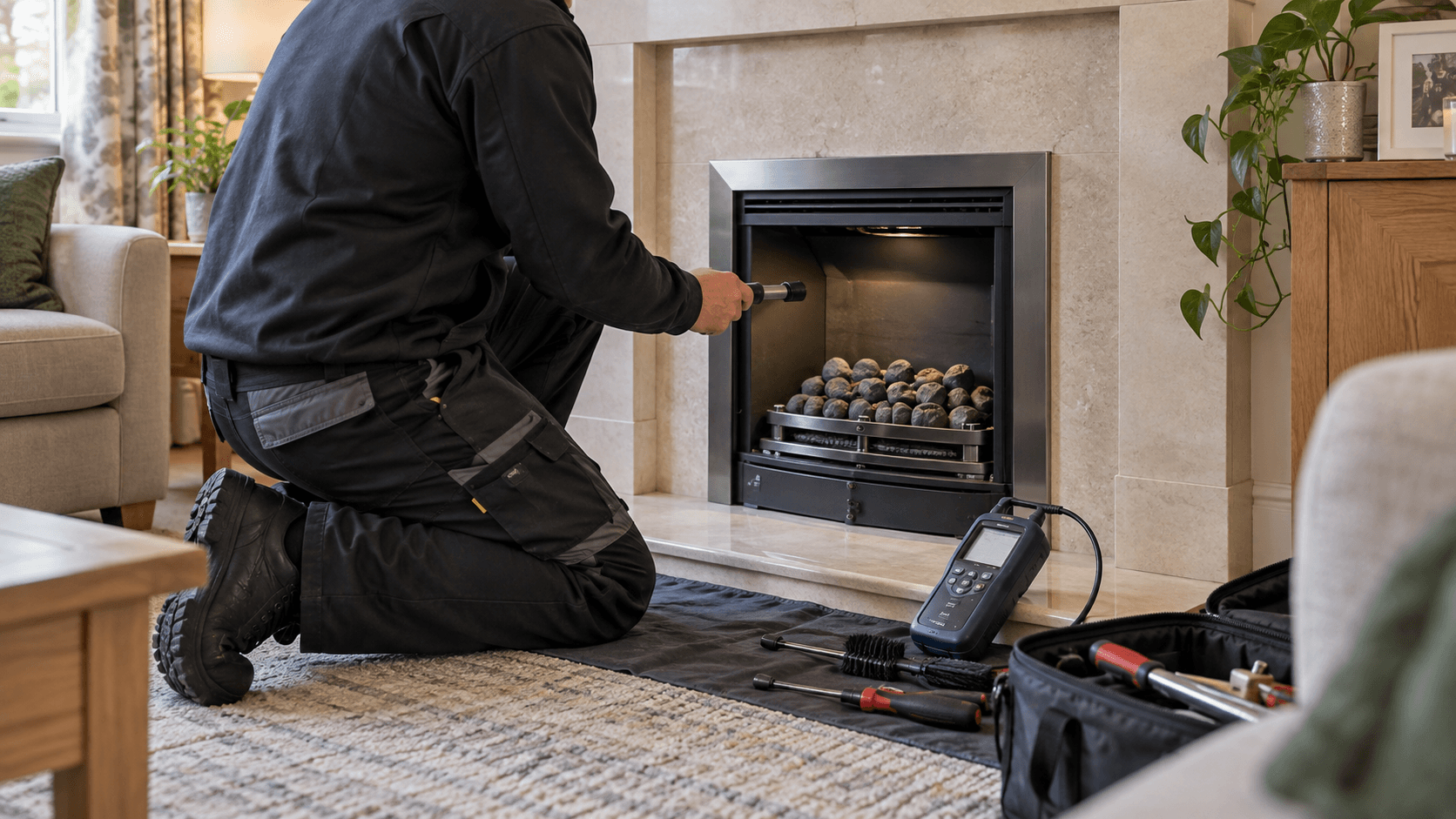
Gas work should be treated as a controlled job: checking the setup, access, isolation, visible condition and the practical risks before deciding the right next step. An engineer who works that way is one you want.
Warning signs in the home
A correctly burning gas appliance burns with a crisp blue flame. A lazy yellow or orange flame is the classic warning sign that combustion is not happening properly, and it should be treated as a reason to stop using the appliance and get it checked.
Other signs travel with it: sooty or black marks around an appliance, unusual amounts of condensation in the room when it is running, a pilot light that keeps going out, or a smell that appears only when the appliance is on.
Carbon monoxide symptoms are the ones people miss because they resemble ordinary illness: headaches, dizziness, nausea and tiredness that improve when you leave the house and return when you come back. Anything that follows that pattern deserves immediate attention.
An audible carbon monoxide alarm is cheap, and it is worth having near any gas appliance and any room where somebody sleeps. It detects what nobody can smell.
- Yellow or orange flames instead of crisp blue.
- Sooty or black marks around an appliance.
- Excess condensation when an appliance is running.
- Symptoms that improve when you leave the house and return when you come back.
If you smell gas
This is the one procedure worth knowing before you need it, because it is the opposite of what instinct suggests. Do not touch electrical switches, including light switches, and do not use anything that could produce a spark.
Turn the gas off at the meter control valve if you can reach it safely. Open doors and windows. Leave the property, and call the national gas emergency service from outside. Do not go back in until you have been told it is safe.
Only once that has been dealt with does the repair conversation begin. Many gas jobs also touch boilers, cookers, fires or heating controls, so the follow-up work is often connected to something else in the house rather than isolated.
Tami Plumbing covers gas safety certificates, boiler repair and central heating across Nottingham, which means the safety visit and whatever follows it can be handled on one route rather than three.
Related pages
Questions customers ask
Can a kitchen fitter connect my gas hob?
Only if they hold the relevant gas registration for that type of appliance. Connecting or disconnecting a gas hob or cooker is gas work regardless of how simple it looks, and general building or kitchen-fitting qualifications do not cover it.
How do I check an engineer is registered?
Ask to see the identity card and look at the back, where the specific categories of work are listed. Being qualified for boilers is not the same as being qualified for cookers or fires, so check the category that matches your appliance.
What should I do if I smell gas?
Do not touch electrical switches or anything that could spark. Turn the gas off at the meter if you can do so safely, open doors and windows, leave the property, and call the national gas emergency service from outside.
If it touches the gas supply or a gas appliance, it needs a registered engineer, and the card should be checked for the specific category. Blue flames, no soot, and a working alarm are the everyday reassurance.
Tami Plumbing carries out gas work across Nottingham with safety and clarity first. The contact page is the place to describe the appliance.